


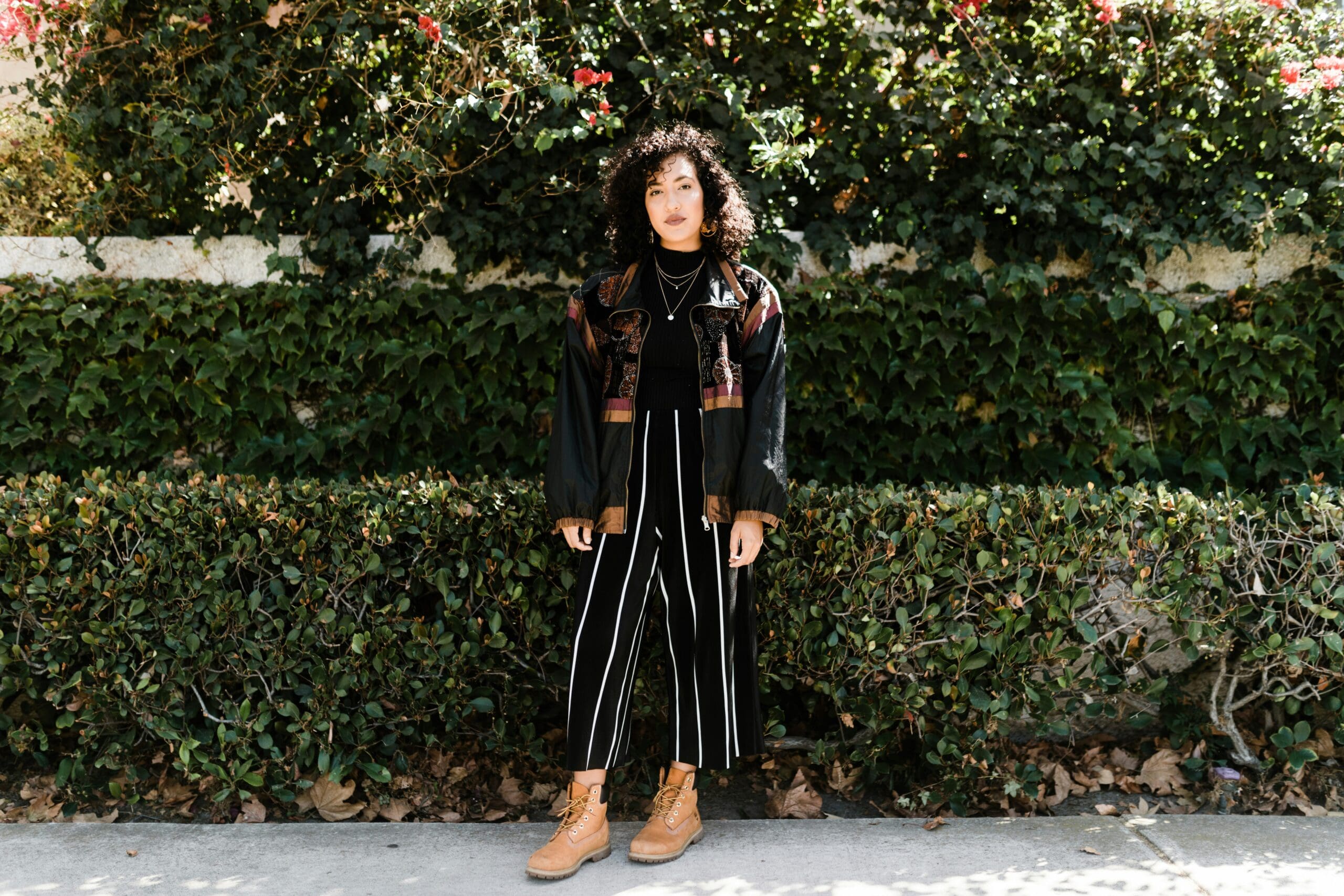








Growing up mixed — biracial, multiracial, ethnically blended, culturally layered — then you know this better than anyone. These phrases aren’t just once you hear. They are the ones you absorb throughout your life.
You learned early how to read a room, read a face, read the subtext beneath someone’s “curiosity.” You learned how to brace for the questions that were ostensibly innocent but touched on tender matters: your belonging, your identity, your wholeness.
Growing up mixed means growing up in a world obsessed with categories — a world where people try to make sense of you before you’ve even learned how to make sense of yourself.
These phrases stick because they don’t just describe your identity.
They shape it.
Below, we’ll explore the lines kids hear most often growing up mixed, what they’re doing beneath the surface, and how to hold them with both clarity and compassion.
1. “What are you?” — The Question That Isn’t a Question
Every mixed kid knows this one.
It is the mixed experience’s unofficial slogan— unwanted yet ubiquitous.
At face value, it appears to be curiosity.
But its impact is rarely neutral.
Because when a stranger looks at you and asks, “What are you?” they are not asking about your interests, your passions, your dreams, or your humanity.
They are saying:
- “You don’t fit what I expect.”
- “I need you to explain yourself.”
- “Your existence is ambiguous to me.”
- “You must categorize yourself for my comfort.”
Growing up mixed, this question becomes a micro-lesson in hyper-awareness:
- What do they see in me?
- What do they think I am?
- Should I tell the truth?
- If I answer simply, will they ask again?
- Will this get weird?
- Will they argue with my answer?
It positions you as an object first, person second.
What it does:
It reinforces the idea that your identity is performative — something displayed for others, rather than lived within yourself.
What to hold:
You are a whole human, not a puzzle for strangers to solve.
Your identity is not owed; it’s yours.
2. “Where are you from? No, where are you really from?”
If “What are you?” is the opener, this one is the follow-up.
The first question pretends to ask about geography.
The second reveals the real agenda: your difference.
What it communicates:
“You can’t be from here.”
“You don’t match my assumptions.”
“You look like you belong elsewhere.”
Even when spoken with a smile, it can trigger a familiar ache — a sense of being a perpetual outsider, a permanent traveler, a visitor in your own home.
When growing up mixed, kids especially internalize this quickly:
- If I don’t look like the people around me, do I belong here?
- Do I have a right to claim this place as my own?
- Why is my experience not enough?
For mixed people who grew up in the U.S., this question is particularly painful. You can be born and raised in Seattle, LA, Detroit, Atlanta — and still be treated like a foreign artifact.
What to hold:
You are allowed to claim the places that shaped you — not the ones others project onto you.
Your story is valid, even if someone else can’t categorize it.
3. “Oh, so you’re half-white.”
Few lines flatten identity as fast as this one. This phrase reduces the complexity of lineage, culture, ancestry, and history to a fraction. It assumes whiteness is the axis of measurement and invisibilizes every nonwhite-to-nonwhite mix. Worse, it assumes the meaning of your identity without asking you anything about it.
What it does:
Growing up mixed, this phrase teaches children early that people are more interested in understanding them through hierarchy, stereotypes, or expected categories than through curiosity, nuance, or relationships.
It reinforces:
- “White as the default.”
- “Everything else is deviation.”
- “Your identity is math, not meaning.”
- “You are a composition, not a person.”
What to hold:
You are not half.
You are whole.
Your identity is a rich tapestry, not a divided pie chart.
No one has the authority to reduce your story.
4. “You don’t look Black/Asian/Latinx/Native enough.” — The Policing of Authenticity
This one often comes from inside your own racial communities — which makes its wound deeper.
It may come as:
- “You’re too light to be _____.”
- “You’re too dark to be _____.”
- “Your hair doesn’t match.”
- “You don’t have the nose/eyes/features.”
- “People wouldn’t know you’re ____ unless you told them.”
These phrases don’t just comment on your appearance.
They challenge your right to belong.
Mixed adults often tell me in therapy:
- “I felt like a guest in my own culture.”
- “I didn’t want to be corrected anymore.”
- “I learned to shrink or overperform.”
- “I didn’t know where home was.”
What it does:
It erodes identity from the inside.
It makes your reflection feel suspect.
It teaches mistrust of your own experience.
What to hold:
Your authenticity is not determined by phenotype.
You belong because you belong — not because you checked someone’s box.
5. “Mixed-race people are the future!”
On its surface, this sounds uplifting.
It positions mixed people as hope, evolution, progress.
But look underneath:
- It objectifies.
- It generalizes.
- It ignores the present.
- It erases the struggles mixed people face right now.
- It uses mixed bodies as symbols rather than humans.
It also carries an odd, often overlooked burden:
Expectation.
Suddenly, mixed identity becomes prophecy.
You become a metaphor.
A sign of what society “should” become.
Many clients feel this as pressure:
- “I have to be the bridge.”
- “I should be more socially aware.”
- “I have to represent harmony.”
- “I can’t feel confused.”
What to hold:
You do not have to be anyone’s future.
You are allowed to be human today — messy, proud, evolving, contradictory, real.
You deserve presence, not projection.
6. “Can I touch your hair?” / “You have such interesting features. / You’re so beautiful.”
These phrases are among the most common, and they’re also objectifying and examples of exoticism. Even when said by loving adults or teachers, they turn the mixed child’s body into a spectacle:
- hair becomes novelty
- skin becomes attraction
- features become curiosity
- identity becomes performance
For many mixed kids, the body becomes the first site of racial confusion:
- “Why do people comment on my hair so much?”
- “Why does my skin feel public?”
- “Why are my features ‘unique’?”
- “Why do strangers feel entitled to me?”
What it does:
It creates a lifelong somatic memory of hypervisibility — being seen and not seen at the same time.
What to hold:
Your body is not public property.
Your hair is not cultural currency.
Your features are not an exhibit.
You deserve autonomy, respect, and privacy — always.
Why These Phrases Matter: The Accumulated Impact
One comment alone may seem small.
But identity isn’t shaped by single events — it’s shaped by repetition.
Repeated questioning, correction, curiosity, and categorization creates:
— Identity hypervigilance
always scanning for cues
— Code-switching and self-editing
changing depending on environment
— People-pleasing or withdrawal
protecting against rejection
— Performance identity
feeling pressured to prove legitimacy
— Emotional invisibility
being seen for features, not feelings
— Belonging wounds
feeling “in-between” rather than “part of”
Mixed kids grow up carrying the emotional labor of explaining, justifying, and negotiating identity before they even understand identity development itself.
This has real implications in adulthood:
- difficulty claiming space
- confusion in relationships
- cultural overcompensation
- shame around authenticity
- fragmented self-concept
- burnout from being “the bridge”
But healing is possible.
Reclamation is possible.
Integration is possible.
The Path Toward Healing, Identity, and Belonging
Supporting mixed-race individuals — whether as therapists, parents, educators, or community — requires intention.
Below are the core pillars of support.
A. Invite Story, Not Stereotype
Instead of asking identity-extraction questions, invite narrative:
- “How do you describe your background?”
- “What does your identity mean to you?”
- “What experiences shaped you growing up?”
- “How do you want to be seen?”
Mixed people don’t need interrogation — they need witnessing.
B. Build Identity With Depth, Not Fractions
Help mixed individuals explore:
- lineage
- migration stories
- cultural practices
- family roots
- personal meaning
- complex ancestry
- evolving identity over time
Identity is not static.
It’s a living practice.
Affirm the “both/and,” the “many/and,” the fluidity and evolution.
C. Foster True Belonging
Belonging is not aesthetic. Belonging is emotional.
Create environments where mixed people can be:
- nuanced
- confused
- proud
- frustrated
- curious
- in-process
Help them understand:
You don’t have to “look” like a group to belong to it.
Belonging is a felt sense — not a phenotype.
D. Untangle the Burden of Expectation
When mixed kids are told they are “the future,” it ignores the present:
- the microaggressions
- the cultural clashes
- the pressure
- the confusion
- the identity development tasks
Allow mixed individuals to explore:
- What feels heavy?
- What feels hopeful?
- What isn’t yours to carry?
- What expectations do you want to release?
You don’t owe the world symbolism.
You owe yourself truth.
Final Reflections: The Power and Tenderness of Mixed Identity
To the mixed kid you were — the one who fielded questions instead of care, curiosity instead of connection — I want to say:
Your experience, complexity and voice matters.
And none of these phrases, assumptions, or projections get to decide who you are.
Identity is not something you justify.
Identity is something you inhabit.
Therapy can be a space where:
- your story is not questioned
- your belonging is not conditional
- your identity is not debated
- your complexity is not overwhelming
- your feelings are valid
- your self is whole
You do not have to stay in “the in-between” alone.
You can build a grounded, integrated identity — one that belongs to you, not to the world’s questions.
When you’re ready, I’m here to walk this journey with you.




+ show Comments
- Hide Comments
add a comment